• 972-800-8423
Atlas Restoration Contractors
  • Commercial
    • Replacement & Installation
    • Storm Restoration
    • Maintenance & Repair
  • Residential
    • Replacement & Installation
    • Storm Restoration
    • Maintenance & Repair
  • Gallery
  • About Us
    • Areas We Serve
      • Dallas-Fort Worth
      • Austin
      • Houston
      • San Antonio
    • Testimonials
    • Our Team
    • Blog
  • Contact
  • Menu Menu

How Commercial Fall Roof Maintenance and Evaluations Help Prevent Winter Emergencies

A commercial roof that made it through hail season without a scratch can still fail in January. Cold snaps, trapped moisture, and small defects that nobody noticed over the summer quietly add up once temperatures drop. By the time a stain shows up on a ceiling tile, the repair is usually bigger and more disruptive than it needed to be. Fall roof maintenance gives property owners one clean window to find those weak spots while the weather is still cooperating.

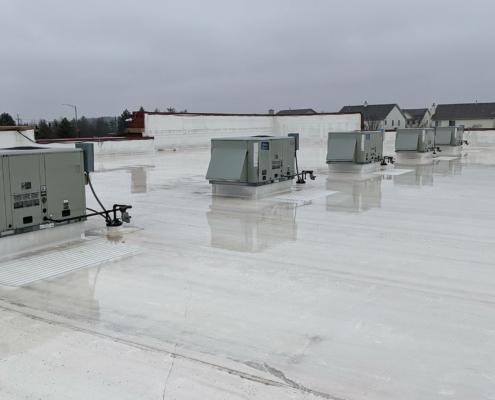
Why Winter Is Hard on a Commercial Roof

Most roof worry on commercial roofs in North Texas centers on hail and summer heat, so winter often gets overlooked. Cold weather stresses a roof in a different way than a storm does. Instead of one big hit, winter delivers slow, repeated strain that wears materials down a little more each day. That slow wear is why winter roof damage prevention has to begin before the first freeze, and why fall roof maintenance matters so much. Two causes do most of the harm.

Freeze-Thaw Cycles and What They Do to a Membrane

Texas winters rarely stay cold for long. A roof can sit below freezing overnight, warm up by afternoon, and repeat that swing for days. Membranes such as TPO and EPDM shrink slightly in the cold and stretch back out as they warm, and that constant movement pulls at seams, edges, and flashings. Over a season, freeze-thaw roof damage can turn a hairline gap into a split that lets water in. Because the movement is gradual, nothing looks wrong until a leak appears.

Fall Moisture That Gets Trapped Before the Cold Arrives

Fall rain works its way into small openings around vents, pipes, and rooftop equipment. If that water is still sitting in a crack when temperatures fall, it freezes and expands, which pries the opening wider. The next thaw lets in even more water. Wet insulation under the membrane also stops insulating well, which can shorten the life of the roof system. Many of these openings start as small problems that begin years before the first leak, and October is the easiest month to catch them.

Winter finds the weak spots a roof has been hiding all year. Atlas can evaluate your property now and put a commercial roof maintenance and repair plan in place that keeps small issues small through the cold months.

Learn More

What a Fall Roof Evaluation Should Cover

A fall commercial roof evaluation is more than a walk across the roof. It covers the specific areas where winter problems tend to begin, and it ends with written findings the owner can act on. Think of it as a commercial roof maintenance checklist built for the coldest months of the year. Owners who know what to expect from the process can plan around it more easily. Each item below guards against a different kind of winter trouble.

  • Membrane condition: Evaluators look for cracks, blisters, punctures, and worn spots. Seams get extra attention because they are the first place cold-weather movement shows up. These are the places where shrinking in the cold does the most harm.
  • Flashings and edges: The pieces where the roof meets walls, curbs, and parapets move the most with temperature swings. Loose or lifted sections are repaired before they open up.
  • Penetrations and sealants: Pipes, vents, and equipment supports all create seams that depend on sealant. Dried or cracked sealant is a common way for fall rain to get in.
  • Drainage: Drains and scuppers should be clear of leaves and debris so water leaves the roof instead of pooling. Standing water that freezes adds weight and stress.
  • Documentation: Photos and written notes record the roof’s condition before winter begins. That record becomes the baseline for later repairs and for hail damage claims and evaluations after a storm.

A Simple Fall Timeline for Texas Property Owners

Timing matters as much as the evaluation itself. Waiting for the first cold front leaves little room to schedule repairs, order materials, and finish work in good weather. Spreading the work across the season keeps fall roof maintenance manageable and avoids rushed decisions. This timeline works well for most commercial properties across Dallas-Fort Worth and the rest of Texas.

  • September: Schedule the evaluation. Booking early means the work happens while temperatures are mild and crews still have openings. Mild weather also makes it easier to see problems clearly.
  • October: Review the findings and complete repairs. Sealants and membrane repairs cure best in moderate weather, so this is the right month to fix what the evaluation found. Larger findings can be weighed against options like roof coatings or a full replacement.
  • November: Clear the drains again and organize the records. Most leaves are down by now, so a second look at drainage keeps water moving. Photos and reports get filed together so they are easy to find later.
  • December: Stay ready for winter storms. With a documented baseline in place, any new damage is easier to identify, and storm restoration and insurance conversations go more smoothly. A quick look after any major freeze keeps small issues from growing.

Why a Maintenance Program Beats One-Time Fixes

A single evaluation helps, but a repeating schedule is where the real value builds. A commercial roof maintenance program puts evaluations, reports, and repairs on a calendar so nothing depends on memory or luck. It also turns seasonal roof care into a habit instead of a reaction to the last leak. Planning ahead is also how a proactive maintenance program pays for itself over the life of a building. Good fall roof maintenance is simply the first stop in that yearly cycle.

Documentation That Protects Your Property

Every visit, starting with fall roof maintenance, produces photos and written notes. Over time, those records show exactly how the roof has aged and what has been repaired. If a storm causes damage later, that history helps separate new damage from old wear. It also helps owners and asset managers plan budgets with fewer surprises. A roof with a clear paper trail is far easier to manage than one nobody has looked at in years.

Catching Small Problems Before They Become Emergencies

A lifted flashing found in October is a short repair. The same flashing found in January, after water has soaked the insulation below, can mean tenant complaints, interior damage, and a rushed call for help. Visits on a set schedule catch problems while they are still minor, and they show when a roof is nearing the end of its useful life, so full replacement can be planned instead of forced. For commercial roof maintenance Texas owners can trust, the schedule should fit the region’s mix of storms, heat, and sudden cold.

Schedule Your Fall Roof Evaluation Before the First Freeze

Atlas Restoration Contractors evaluates commercial roofs across Dallas-Fort Worth and the rest of Texas, with photo documentation and detailed reporting. Start your fall roof maintenance plan with a call to 972-800-8423 or send a message to set up a time that works for your building.

Share This Post

  • Share on Facebook
  • Share on X
  • Share on WhatsApp
  • Share on Pinterest
  • Share on LinkedIn
  • Share on Tumblr
  • Share on Vk
  • Share on Reddit
  • Share by Mail

More Like This

Commercial Roof Repair

5 Conditions That Look Fine From the Ground But Lead to Costly Commercial Roof Repair

Maintenance and Repair
https://restorewithatlas.com/wp-content/uploads/2026/10/Commercial-Roof-Repair.jpg 1250 2000 Abstrakt Marketing /wp-content/uploads/2026/02/Atlas-Logo-COLOR.png Abstrakt Marketing2026-10-28 17:52:162026-10-28 17:52:205 Conditions That Look Fine From the Ground But Lead to Costly Commercial Roof Repair
What Commercial Property Owners Should Do After Hail Damage In The First 48 Hours

What Commercial Property Owners Should Do After Hail Damage in the First 48 Hours

Maintenance and Repair
https://restorewithatlas.com/wp-content/uploads/2026/09/What-Commercial-Property-Owners-Should-Do-After-Hail-Damage-in-the-First-48-Hours.jpg 1250 2000 Abstrakt Marketing /wp-content/uploads/2026/02/Atlas-Logo-COLOR.png Abstrakt Marketing2026-09-14 15:29:512026-09-14 15:29:56What Commercial Property Owners Should Do After Hail Damage in the First 48 Hours
How A Proactive Roof Maintenance Program Pays For Itself

How a Proactive Roof Maintenance Program Pays for Itself

Maintenance and Repair
https://restorewithatlas.com/wp-content/uploads/2026/08/How-a-Proactive-Roof-Maintenance-Program-Pays-for-Itself.jpg 1250 2000 Abstrakt Marketing /wp-content/uploads/2026/02/Atlas-Logo-COLOR.png Abstrakt Marketing2026-08-07 15:04:042026-11-25 15:30:14How a Proactive Roof Maintenance Program Pays for Itself
Why Commercial Roof Problems Start Years Before The Leak

Why Most Commercial Roof Problems Start Years Before the First Leak

Maintenance and Repair
https://restorewithatlas.com/wp-content/uploads/2026/08/Why-Commercial-Roof-Problems-Start-Years-Before-the-Leak.jpg 1250 2000 Abstrakt Marketing /wp-content/uploads/2026/02/Atlas-Logo-COLOR.png Abstrakt Marketing2026-08-06 13:57:242026-08-26 08:36:18Why Most Commercial Roof Problems Start Years Before the First Leak
Previous Previous Previous Next Next Next

Categories

  • Commercial Roofing Coatings
  • Commercial Roofing Dallas
  • Maintenance and Repair
  • Roof Evaluations
  • Storm Restoration
Atlas Logo White Nopadding

Stay Connected

What We Do

Commercial Roofing 

Residential Roofing 

About Us

Our Gallery

Contact Us

259 Ranch Trail, Ste A
Rockwall, TX 75032

972-800-8423

[email protected]

Website by Abstrakt Marketing Group ©
  • Privacy Policy
  • Sitemap
Scroll to top Scroll to top Scroll to top

This site uses cookies. By continuing to browse the site, you are agreeing to our use of cookies.

AcceptLearn more

Cookie and Privacy Settings


How we use cookies

We may request cookies to be set on your device. We use cookies to let us know when you visit our websites, how you interact with us, to enrich your user experience, and to customize your relationship with our website.

Click on the different category headings to find out more. You can also change some of your preferences. Note that blocking some types of cookies may impact your experience on our websites and the services we are able to offer.

Essential Website Cookies

These cookies are strictly necessary to provide you with services available through our website and to use some of its features.

Because these cookies are strictly necessary to deliver the website, refusing them will have impact how our site functions. You always can block or delete cookies by changing your browser settings and force blocking all cookies on this website. But this will always prompt you to accept/refuse cookies when revisiting our site.

We fully respect if you want to refuse cookies but to avoid asking you again and again kindly allow us to store a cookie for that. You are free to opt out any time or opt in for other cookies to get a better experience. If you refuse cookies we will remove all set cookies in our domain.

We provide you with a list of stored cookies on your computer in our domain so you can check what we stored. Due to security reasons we are not able to show or modify cookies from other domains. You can check these in your browser security settings.

Other external services

We also use different external services like Google Webfonts, Google Maps, and external Video providers. Since these providers may collect personal data like your IP address we allow you to block them here. Please be aware that this might heavily reduce the functionality and appearance of our site. Changes will take effect once you reload the page.

Google Webfont Settings:

Google Map Settings:

Google reCaptcha Settings:

Vimeo and Youtube video embeds:

Accept settingsHide notification only